Demand of Imported Rice in Mozambique (2011 - 2020)

Type
File
Date of Publication
May 10, 2024
Description/Abstract

Rice plays an important role in the food and nutrition security of the Mozambican population and has been importing rice to meet growing consumption needs. There are several studies regarding demand of imported rice worldwide. However, it is noted that despite the importance of imported rice in national consumption, the empirical and quantitative studies on the demand for imported rice in Mozambique are scarce. This study results from the need to contribute to filling the information gap by providing the quantification of the impact of income and price on the consumption of imported rice. Based on monthly rice import data from 2011 to 2020, obtained from INE, the Source Differentiated Almost Ideal Demand System (SDAIDS) model and the Seemingly Unrelated Rules (SUR) approach are applied to estimate demand systems for imported rice. The period was chosen due to availability of data. The results of this study show that the national production of rice still does not cover internal needs, so the country resorts to imports to fill the deficit. The elasticities of demand for rice imported into Mozambique show that all income elasticities of demand are statistically significant, except for “other countries” or Rest of the World. The results also show that when income increases by 1%, the demand for rice increases by 1.2% when coming from “Pakistan”, and by 1.1% when coming from “Singapore”, by 1.03% for “Vietnam”; and in for those from “Myanmar” (1.1%), which suggests that rice from these countries can be classified in the luxury goods category. The results also illustrate that when the price increases by 1%, the quantities demanded decrease, on average, by 1.06% for rice coming from “Pakistan”; by 1.06% for those from “Singapore”; 1.22% for those from “Myanmar”; 0.96% for those from “Vietnam”; by 0.89% for “India”; by 0.79% for “China”; in 0.974% for “Thailand” and in 0.56% for those coming from “other countries”. The low levels of production and productivity show that it is still a challenge to guarantee rice self-sufficiency in Mozambique, and efforts to improve supply must continue, since the country's dependence on imported rice can potentially create conditions of vulnerability and insecurity and adverse market effects have competitive advantages.

Author or Institution as Author
Macia, S.
Co-authors

Macuácua, J., Vilanculos, A., Mahaluça, F.

Language
Topic
Category
Contact Information

Crescimento e fitossociologia de uma floresta com Colophospermum mopane, em Mabalane, Província de Gaza, Moçambique

Type
File
Date of Publication
Dec 28, 2012
Description/Abstract

O presente trabalho teve como objetivos caracterizar a composição e estrutura da floresta, dos ecossistemas de mopane, estimar os índices de crescimento e avaliar a sua distribuição diamétrica. Foram usados dados de parcelas permanentes estabelecidas em 2002 na região de Mabalane, Província de Gaza. Foi analisada a composição das espécies, sendo determinada a estrutura horizontal da floresta (abundância, dominância, frequência e índice de valor de importância) e e o incremento periódico anual em diâmetro. Os resultados mostraram a ocorrência de 15 espécies arbóreas pertencentes a onze famílias botânicas. A floresta é dominada pela espécie Colophospermum mopane (Benth.) J. Léonard (mopane), com uma abundância de 258,80 árvores por hectare, que corresponde a 85,8% do total dos indivíduos. O incremento periódico anual em diâmetro observado no período de 2003 a 2010 foi de 1,19 mm ano-1, e verificou-se a distribuição diamétrica de J – Invertido. A floresta de mopane apresenta um crescimento lento e pouca diversidade de espécies, sendo importante a aplicação de intervenções silviculturais e estabelecer o plano de manejo de acordo com o ritmo de crescimento da espécie e estrutura horizontal e vertical dos remanescentes a serem manejados.

Author or Institution as Author
Bila, J.M.
Co-authors

Mabjaia, N.

Language
Topic
Category
Contact Information

Determinantes do Acesso pelos Produtores aos Serviços de Extensão Rural em Moçambique

Type
File
Date of Publication
Oct 30, 2024
Description/Abstract

Nos países africanos, em geral, e em Moçambique, em particular, o acesso aos serviços de extensão agrária pelos produtores, tem sido o único meio para a maioria deles acederem a informação e conhecimento agrário. Em Moçambique são poucos os estudos que analisam os fatores que influenciam o acesso aos serviços de extensão. Portanto, este estudo conduzido com base nos dados do Inquérito Agrário Integrado (IAI2020) e usando a regressão logística binária, visa contribuir para melhor entendimento dos fatores que determinam o acesso aos serviços de extensão agrária pelos produtores. Os resultados da pesquisa indicam que o sexo, a idade, a formação em agropecuária, fazer trabalho assalariado, ser membros de uma associação, ter acesso ao crédito e o tamanho da área de produção têm uma relação positiva com o acesso aos serviços de extensão rural.

Author or Institution as Author
Filimone, C
Co-authors

Macia, S.J.

Language
Category
Citation

Filimone, C. & Macia, S. J. Determinantes do Acesso pelos Produtores aos Serviços de Extensão Rural em
Moçambique. Revista De Extensão E Estudos Rurais, 13(1), 2024. https://doi.org/10.36363/rever.v13i1.16257


Development and Validation of an SNP Marker for Identifying Xanthomonas oryzae pv. oryzae Thai Isolates That Break xa5-Mediated Bacterial Blight Resistance in Rice

Type
File
Date of Publication
Apr 25, 2025
Description/Abstract

This is a document about the Development and Validation of an SNP Marker for Identifying Xanthomonas oryzae pv. oryzae Thai Isolates That Break xa5-Mediated Bacterial Blight Resistance in Rice

Author or Institution as Author
Tebogo Balone1
Co-authors

 Ananda Nuryadi Pratama2 , Werapat Chansongkram2 , Thanita Boonsrangsom1,2, Kawee Sujipuli1,2, and Kumrop Ratanasut1,2

Language
Topic
Category
Resource Type
Citation

Tebogo Balone et el, 2024. Development and Validation of an SNP Marker for Identifying Xanthomonas oryzae pv. oryzae Thai Isolates That Break xa5-Mediated Bacterial Blight Resistance in Rice, 12pg, Korea

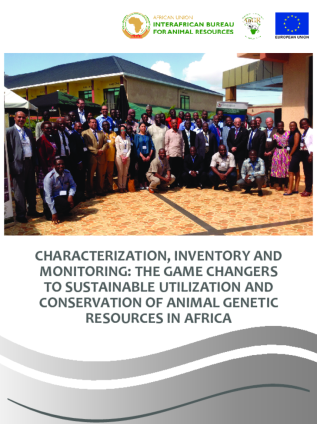
CHARACTERIZATION, INVENTORY AND MONITORING: THE GAME CHANGERS TO SUSTAINABLE UTILIZATION AND CONSERVATION OF ANIMAL GENETIC RESOURCES IN AFRICA

Type
File
Date of Publication
Sep 05, 2024
Description/Abstract

Considering the fact that Africa have large reserves of AnGR, the stark poverty among livestock keeper’s points to the fact that these resources have not been extensively developed and utilized.

Language
Category
Resource Type

AWARENESS CREATION, COMMUNICATION AND ADVOCACY IN SUPPORT OF BETTER MANAGEMENT OF AnGR IN AFRICA

Type
File
Date of Publication
Sep 05, 2024
Description/Abstract

Greater diversity of species and breeds enable rural households to ensure their food security by continuing to produce in uncertain environments, thus enabling them to manage risks more efficiently. Development of animal genetic resources (AnGR) is a priority for most of the countries in Africa where livestock production constitutes a very important component of the agricultural economy and contributes up to 30% to agricultural Gross Domestic Product (GDP) (Upton, 2004).

Language
Category
Resource Type

Responses of elite sorghum (Sorghum bicolor [L.] Moench) lines developed via gamma-radiation for grain yield, component traits and drought tolerance

Type
File
Date of Publication
Nov 01, 2023
Description/Abstract

Induced plant mutagenesis is a powerful technique to create genetic variation for agronomic traits and drought tolerance selection programs. The objective of this study was to determine the response of elite sorghum (Sor- ghum bicolor [L.] Moench) lines developed via gamma-radiation for grain yield, component traits, and drought tolerance to select best performing lines for cultivation in water-stressed environments. Ten newly developed mutant lines and four check varieties were evaluated in two growing seasons under drought-stressed (DS) and non-stressed (NS) conditions in Namibia. Mutant lines were evaluated using a factorial experiment laid out in a randomized complete block design with three replications in custom-made rainout-shelter facility. Data on grain yield and yield-related traits were collected and drought tolerance selection indices were computed using mean genotype yield under non-stressed condition and drought-stressed condition. Data were subjected to standard analysis of variance, correlation and principal component analyses. The interaction effect of genotype × drought stress × season was non-significant for most assessed traits suggesting the relatively stable performance of the test lines for selection. Grain yield response of test genotypes varied from 0.55 to 2.27 t/ha under DS and 1.84 to 4.05 t/ha in NS conditions. Grain yield positively and significantly (P < 0.05) correlated with harvest index (r = 0.79), panicle weight (r = 0.75) and panicle length (r = 0.37), and negatively correlated with days to flowering (r = − 0.35) under DS condition. Principal component (PC) analysis identified two PCs accounting for 96.35 % of total genotypic variation based on drought tolerance selection indices. Biplot analysis using a combination assessed traits allowed selection of drought tolerant mutant lines designated as ML4, ML10, ML6, and ML5 with mean grain yield of 2.27, 2.05, 1.89 and 1.67 t/ha under DS conditions, in that order. The selected lines are recommended for further multi-environment evaluations for release and large-scale production in Namibia or other related agro-ecologies.

Author or Institution as Author
Maliata Athon Wanga, Hussein Shimelis, Jacob Mashilo, Lydia N. Horn, Fatma Sarsu
Language
Category
Resource Type

African Journal of Agricultural Research

Type
File
Date of Publication
Oct 01, 2023
Description/Abstract

This article focuses on the results from trials developed to monitor the short-term effects of conventionally tilled systems versus CA on soil quality and crop productivity under conditions of the major cropping systems in central, north-central and north-eastern regions of Namibia. Conventional tillage (CT), Minimum tillage (MT), Minimum tillage, mulch (MT-M), Minimum tillage, rotation (MT-R) and Minimum tillage, mulch and rotation (MT-MR) were the primary treatments tested. Significant differences (p≤0.000) among the treatments were observed in the 0-60 cm soil profiles where MT-M plots had the highest soil moisture content (39.8 mm, Standard Error of Mean 0.2815) over the study period. A significant difference (p=0.0206) in grain yield was observed in the second season with CT plots yielding the highest grain yield (3852.3 kg ha-1, standard error of mean 240.35). Results suggest that CA has the potential to increase water conservation and contribute to reduction of the risk of crop failure. Climate change driven degradation under conventional tillage necessitate alternative sustainable tillage methods. Conservation tillage methods and conservation agricultural practices that minimize soil disturbance while maintaining soil cover need to be adopted more locally as viable alternatives to conventional tillage.

Author or Institution as Author
L. P. Kudumo,F. Itanna,C. Thierfelder,J. Kambatuku
Language
Category
Resource Type
Citation

APA /

Kudumo, L. P., Itanna, F., Thierfelder, C., & Kambatuku, J. (2023). Soil moisture content and maize grain yield under conventional and conservation agriculture practices - results of short term field tests in Liselo, Namibia. African Journal of Agricultural Research, 19(9), 891-896. 

Chicago /

L. P. Kudumo, F. Itanna, C. Thierfelder and J. Kambatuku    . "Soil moisture content and maize grain yield under conventional and conservation agriculture practices - results of short term field tests in Liselo, Namibia." African Journal of Agricultural Research 19, no. 9 (2023): 891-896. 

MLA /

L. P. Kudumo, et al. "Soil moisture content and maize grain yield under conventional and conservation agriculture practices - results of short term field tests in Liselo, Namibia." African Journal of Agricultural Research 19.9 (2023): 891-896. 

DOI //https://doi.org/10.5897/AJAR2023.16327

URL //https://academicjournals.org/journal/AJAR/article-abstract/CC5998D71187


Genetic Diversity of Mitochondrial DNA of Bemisia tabaci (Gennadius) (Hemiptera: Aleyrodidae) Associated with Cassava and the Occurrence of Cassava Mosaic Disease in Zambia

Type
File
Date of Publication
Sep 01, 2020
Description/Abstract

Bemisia tabaci is an important vector of cassava brown streak viruses and cassava mosaic begomoviruses, the causal agents of cassava brown streak disease and cassava mosaic disease (CMD), respectively. A study was carried out to determine the genetic variability of B. tabaci associated with cassava and the occurrence of CMD in Zambia in 2013 and 2015. Phylogenetic analysis showed the presence of only the sub-Saharan Africa 1 (SSA1) genetic group in Zambia. The SSA1 population had three population subgroups (SGs): SSA1-SG1, SSA1-SG2 and SSA1-SG3. All three SSA1 population subgroups occurred in Western Province. However, only SSA1-SG3 occurred in Eastern Province, while only SSA1-SG1 occurred in North Western and Luapula Provinces. Adult B. tabaci were most abundant in Western Province in 2013 (11.1/plant) and 2015 (10.8/plant), and least abundant (0.2/plant) in Northern Province in both 2013 and 2015. CMD was prevalent in all seven provinces surveyed, with the highest incidence recorded in Lusaka Province in both 2013 (78%) and 2015 (83.6%), and the lowest in Northern Province in both 2013 (26.6%) and 2015 (29.3%). Although SSA1-SG1 occurred at greater abundances than the other subgroups, there was no direct association demonstrated between whitefly subgroup and incidence of CMD. Establishing which B. tabaci genetic groups and populations are associated with CMD and their distribution in the country is a key factor in guiding the development of CMD control strategies for cassava-dependent households.

Author or Institution as Author
Patrick Chiza Chikoti
Co-authors

Mathias Tembo , James Peter Legg , Rudolph Rufini Shirima, Habibu Mugerwa and Peter Sseruwagi 

Institution
ZARI
Language
Category
Citation

Chikoti,P., Tembo, M., Legg . P.J., Shirima, R., Mugerwa, H., & Sseruwagi, P. (2020). Genetic Diversity of Mitochondrial DNA of Bemisia tabaci (Gennadius) (Hemiptera: Aleyrodidae) Associated with Cassava and the Occurrence of Cassava Mosaic Disease in Zambia. Insect

MAFSN MANAGEMENT EMBARKS ON A 2 DAY TEAM BUILDING TRAINING

Type
File
Date of Publication
Sep 01, 2023
Description/Abstract

This article is about the team building exercise that the Managment of the Ministry of Agriculture, Food Security and Nutrition undertook to "self introspect". The reasoning behind this training was the lack of coorination between the Ministry's Departments and its Donor Funded Projects which has led to the Minstry's clients suffering due to limitted and sometimes poorly provided services. The engaged consultant was able to creat awareness to the Managers on the dangers of the "silo mentality" and encouraged them to work together for the benefit of Basotho farmers. The participation of the Minister, PS and DPS gave participants moral and encouragement that the decisions and plans made during this traning will be implemented with full supoort from these three offices. 

Author or Institution as Author
RETHABILE NCHEE
Institution
Department of Agricultural Research
Language
Category
Resource Type
Subscribe to Journal Article

Funding Partners