APPSA Round up - January 2020
Analysis identifyed sewveral yield gaps that could be narrowed with additional investmentments in technology adaptation and dissemination.
Strengthening RCoLs has continued for the past six years covering the upgrading of research infrastructure including farm, laboratory, office equipment, IT and knowledge management sustems.
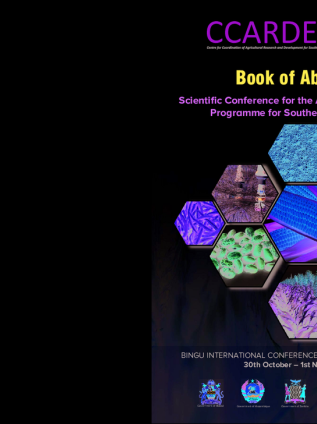
The Book of Abstracts is one of the main outcomes of the Scientific Conference and serves as one of the channels for dissemination of the research outcomes for APPSA.
WAMPP is national in scope covering all of 10 Lesotho’s administrative districts, with a focus on the rangelands that cover more than two thirds of the country’s surface. The project pays special attention to poor rural women and young people with more emphasis on the foothills because there are more incidences of food insecurity.
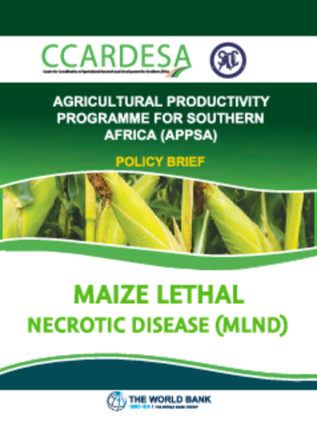
Maize is a major staple food for millions of households in Sub-Saharan Africa. The emergence and prevalence of Maize Lethal Necrosis Disease (MLND) in endemic countries in east Africa among others, threathens the food security and commercial seed trade in the Siouthern African Region.
According to the 2017 Nutrition in WHO African Region report, the prevalence of malnutrition in Malawi, Mozambique and Zambia is very high, and this has been attributed in part to limited dietary diversity. Biofortification represents the most cost effective and sustainable intervention to address micronutrient deficiency malnutrition in Malawi, Mozambique and Zambia compared to commercial fortification and nutrient supplements.
This book documents a decade of research, methodological innovation, and lessons learned in an eco-regional research-for-development program operating in the eastern African highlands, the African Highlands Initiative (AHI). It does this through reflections of the protagonists themselves—AHI site teams and partners applying action research to develop innovation as a means to enhance the impact of their research. This book summarizes the experiences of farmers, research and development workers, policy and decision-makers who have interacted within an innovation system with the common goal of implementing an integrated approach to natural resource management (NRM) in the humid highlands. This book demonstrates the crucial importance of “approach” in shaping the outcomes of research and development and distils lessons learned on what works, where and why. It is enriched with examples and case studies from five benchmark sites in Ethiopia, Uganda, Kenya, and Tanzania, whose variability provides the reader with an in-depth knowledge of the complexities of integrated NRM in agro-ecosystems that play an important role in the rural economy of the region. It is shown that the struggle to achieve sustainable agricultural development in challenging environments is a complex one, and can only be effectively achieved through combined efforts and commitment of individuals and institutions with complementary roles.
Laura German et al (2012) The integrated Natural Resources Management in the Highlands of Eastern Africa -From Concept to Practice, 341pg,

Critical farming and household decisions depend upon the weather, for example, the amount of rain that falls, the length and start date of the rainfall season, the timing of dry spells, and the timing of temperature extremes. Such aspects of the weather vary considerably from year-to-year. PICSA is an approach that aims to help farmers address this challenge and has been used in more than 20 countries across three continents.
PICSA places farmers at the centre of its approach, and helps them to address the above challenges through integrating:
University of Reading (2011) The Participatory Integrated Climate Services for Agriculture( PICSA)
The Economics of Land Degradation (ELD) Initiative aims to create awareness about the costs of land degradation and the benefits of sustainable land management (SLM).
ELD Campus provides high-level training and capacity improvement for policymakers, scientists and academics who want to contribute to the prevention of land degradation across the world. It is available in French and English.
There are 9 thematic modules that cover the following topics:
Besides lectures, scripts and exercises, there are also quizzes to test your knowledge afterwards. Moreover the modules include helpful links and further reading materials.
ELD Initiative (2012) ELD CAMPUS
This article is about a meeting that was converned for the Lesotho National Conservation Agriculture Task Force. It was a revival meeting that was last held about two years ago. The importance of such a meeting is to bring stakeholders in the agricultural sector in Lesotho to deliberate on the issues of Conservation Agriculture and how it can be supported and strenghened in order to address this "monster" called climate change.