Tobacco Legislation in Zimbabwe
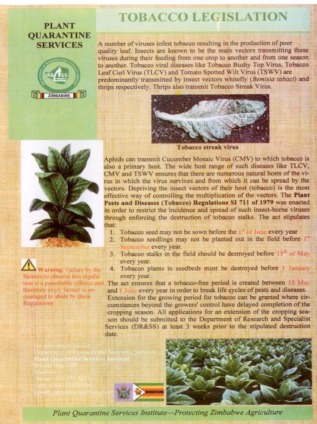
Tobacco legislation in Zimbabwe
Sondayi,L. (2019).Tobacco Legislation
Tobacco legislation in Zimbabwe
Sondayi,L. (2019).Tobacco Legislation
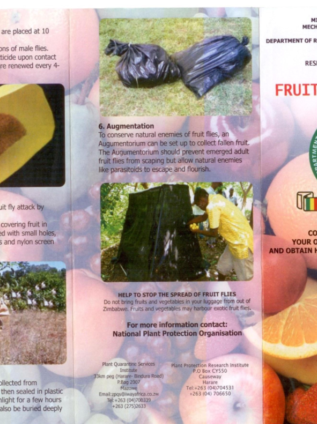
Fruit Fly control
Sondayi,L. 2019,Fruit Flies
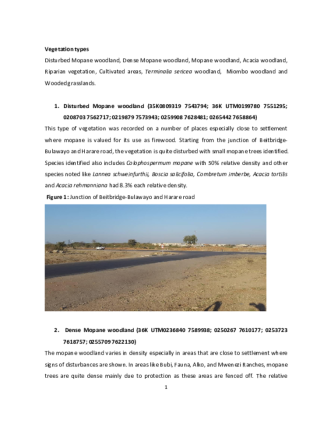
Vegetation types in Zimbabwe
Sondayi, L. (2019).Vegetation types in Zimbabwe
National Seed Certification in Zimbabwe
Sondayi, L. (2019), Seed Certification
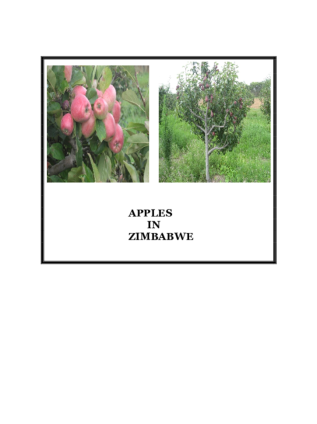
Types of appples grown in Zimbabwe
Sondayi, L. (2019). Types of Apples in Zimbabwe
The Agricultural Productivity Program for Southern Africa (APPSA) has been implemented in
Malawi, Mozambique and Zambia. Malawi being a regional center of leadership (RCoL) for maize
based farming systems. The initiative has made a great contribution to the National Agricultural
System and agricultural Development in Malawi. A few, out of many success stories from APPSA
are contained in this publication. This Magazine contains some of the great work that APPSA has
contributed to Agricultural sector in Malawi. So far, APPSA has released 27 improved agricultural
technologies that are already making a tremendous impact in the three countries. APPSA has
also facilitated the promotion of 85 already released technologies. It has trained 43 people on long
term trainings on PhD (10), Masters (23) and Bachelor’s (10) Degree level. It has also sent many
agricultural staff to short term trainings. APPSA has also raised magnificent infrastructure in a
number of research including Chitedze (Lilongwe), Bvumbwe (Thyolo) and Kasinthula (Chikwawa).
These structures included office blocks, laboratories, irrigation facilities, storage facilities
just to mention a few. In general, APPSA project has been holistic in nature and its fruition is still
dripping out.
A diagnostic survey was conducted in July 2017 in two northern districts of Zambia to investigate presence or absence of cassava brown streak disease (CBSD) and its causal viruses. In total, 29 cassava fields were surveyed and cassava leaf samples were collected from 116 plants (92 symptomatic and 24 non-symptomatic). CBSD prevalence was approximately 79% (23 of 29) across fields. Mean CBSD incidence varied across fields but averaged 32.3% while mean disease severity was 2.3 on a 1-to-5 rating scale. Reverse-transcription polymerase chain reaction screening of all 116 samples with one generic and two species specific primer pairs yielded DNA bands of the expected sizes from all symptomatic plants with the generic (785 bp) and Ugandan cassava brown streak virus (UCBSV)-specific (440 bp) primers. All 24 non-symptomatic samples were negative for UCBSV and all samples tested negative with primers targeting Cassava brown streak virus. The complete genome of a representative isolate of UCBSV (WP282) was determined to be 9,050 nucleotides in length, minus the poly A tail. A comparative analysis of this isolate with global virus isolates revealed its nature as a sequence variant of UCBSV sharing 94 and 96% maximum complete polyprotein nucleotide and amino acid identities, respectively, with isolates from Malawi (MF379362) and Tanzania (FJ039520). This is the first report of CBSD and UCBSV in Zambia, thus expanding the geographical distribution of the disease and its causal virus and further reinforcing the need to strengthen national and regional phytosanitary programs in Africa.
Mulenga, M. R., Boykin, M. L., Chikoti, P. C., Sichilima, S., Ng’uni, D., Alabi, J. O. (2018). Cassava Brown Streak Disease and Ugandan cassava brown streak virus Reported for the First Time in Zambia. Plant Diseases, [online] Vol (102) (7), 1410-1418. Availble at: h://https://apsjournals.apsnet.org/doi/full/10.1094/PDIS-11-17-1707-RE
Seed quality can have a major impact on potential crop yield. Previous research found that about 60% of the crop yield in small cereals such as rice relies on the varietal genetic potential. In Zambia, Malawi, Mozambique and other developing countries, rice is grown as a food and cash crop by smallholder farmers whose productivity, production and marketing potential are yet to be reached.
Mocumbe.s,(2019), in Zambia, Malawi and Mozambique: Yields and Income Are Fueling Farmer’s Decision to Become Rice Seed Growers.Pg.9, Maputo, Mozambique
Among the biotic stresses that affect cowpea (Vigna unguiculata L) productivity, infestation by cowpea bruchid beetles (Callosobruchus maculatus) is a major problem, causing yield losses of up to 100 %. To alleviate this problem, use of resistant varieties is a feasible approach for small-scale farmers. In Zambia, there are no reported sources of resistance to C. maculatus. The objectives of this study were: i) to evaluate certain cowpea mutants, generated at the University of Zambia, for resistance to C. maculatus; ii) to cluster the tested genotypes based on height, number of pods per plant, 100-seed weight, yield ha-1, number of eggs laid and adult emergence; and iii) to evaluate the candidate mutants for protein content. Experiments were conducted at three locations in 2014/15. The mutants, LT 11-5-2-2, BB 7-9-7-5 and BB-14-16-22, were found to be resistant to C. maculatus across locations and they out-performed their respective parents (p< 0.05) in the degree of resistance to C. maculatus. Cluster analysis, using selected agronomic parameters, showed that the selected resistant mutants (cluster B) were more similar to each other (95 %) than to Namuseba and Msandile (included as susceptible genotypes), which clustered at a similarity level of 78 % (cluster A). The mutants, LT 11-5-2-2, BB 7-9-7-5 and BB-14-16-22, showed resistance to C. maculatus, but their protein content was similar to their parents, indicating that this crucial trait had been maintained in the mutants.
Langa, L., Pungulani, L., Sohati, P., Mataa, J., & Munyinda, L. (2017) Resistance to Callosobruchus maculatus Developed Via Gamma Radiation in Cowpea. Journal of Agriculture and Crop [online] vol 3(8), pp 65-71. Available at: : http://arpgweb.com/?ic=journal&journal=14&info=aims

Nitrogen is a major plant nutrient which is most limiting in the soil due to soil losses of mineral nitrogen (N) form. To ensure availability of nitrogen in the soil, the study was conducted to screen four cowpea genotypes for Biological Nitrogen Fixation (BNF) and their contribution to maize yield in maize- cowpea rotation. The cowpea genotypes used were mutants LT11-3-3-12 (LT) and BB14-16-2-2 (BB) and their parental varieties Lutembwe (LTPRT) and Bubebe (BBPRT) respectively. Trials were established at two sites (Chisamba and Batoka) of different soil types. The Randomized Complete Block Design (RCBD) with three replications was used. Labelled 15N urea was applied at 20kgNha-1 on the four cowpea genotypes during 2015/16 growing season. Cowpea plant parts were dried and milled for 15N isotopic analysis. The data collected included Nitrogen content and atom % 15N excess in the fixing cowpea genotypes and non-nitrogen fixing pearl millet to determine total nitrogen derived from the atmosphere (TNdfa) and total nitrogen (TN) in plant parts which were further used to compute Biological Nitrogen Fixation (BNF). The results showed that BNF by cowpea genotypes at Chisamba was 63.9 kg ha-1 and was significantly (P<0.001) more than BNF of 6.6 kgha-1 at Batoka. The LT mutant fixed significantly (P<0.001) higher nitrogen of 86.1 kgha-1 and 16.5kg ha-1 at Chisamba and Batoka respectively than other genotypes. However, both BB and LT mutants significantly fixed more nitrogen than their parents and have demonstrated to increase maize grain yields up-to 12 tha-1 in the maize – cowpea rotation.
Simunji, S., Munyinda, K., Lungu, O., Mweetwa, A., & Phiri, E. (2019). Evaluation of Cowpea (Vigna unguiculata L.walp) Genotypes for Biological Nitrogen Fixation in Maize-cowpea Crop Rotation. Sustainable Agriculture Research. [online]. Vol 8(1) pp 82-93. Available at https://doi.org/10.5539/sar.v8n1p82